Vol.1
Success in Japan Market Entry Is Determined
by Trust Before Strategy
― nCino Japan’s Nomura on the career path and
leadership convictions that shaped his view
By ENJIN Staff
- May 26, 2026-

When overseas companies consider entering the Japanese market, the first topics that usually come under discussion are Go-to-Market strategy and the profile of the talent they should hire. Important as those questions are, Nomura—who led the launch of nCino Japan—came to place greater emphasis on a different and more fundamental perspective.
In his view, whether a business can truly grow in Japan depends on how strong and healthy a relationship of trust can be built between headquarters and the Japan team.
Nomura’s career helps explain how he arrived at that conclusion. He began in sales at a Japanese company, moved into foreign-owned firms, went on to manage large organizations, and eventually became the founding President of nCino Japan. Looking back across that trajectory, one can see the experiences that shaped his thinking. We began by asking him about his own career path and the leadership principles that, in his view, underpin success in Japan.
Q: Could you begin by telling us about your own career background?
Nomura:
Broadly speaking, I have spent my career in IT sales. I started at Fujitsu, where I spent four years, before moving into foreign-owned companies.
One reason I decided to leave Fujitsu was that, if I was going to build a career in sales, I wanted to place myself in an environment where the returns on performance—and the evaluation of that performance—were more visible. Large organizations have clear strengths: they offer stability, and there is value in treating people equitably. At the time, however, I also felt there was a side to that environment in which the difference between strong performance and weak performance was not always clearly reflected. I found that somewhat unsettling.
What concerned me was not so much the environment itself, but the version of myself that might gradually become complacent within it. If, as a salesperson, I began to think, “Perhaps it is acceptable not to sell,” then I felt I would likely drift toward the easier path. I might gradually ease off, or begin, little by little, to stop pushing myself. I felt a strong resistance to that possibility. Precisely for that reason, I wanted to work in an environment where the question of whether I was truly contributing to the organization would be asked more explicitly.
At the same time, there was also an element of curiosity. After registering on a job site, I was approached by several foreign-owned companies, and EMC was one of them. I already knew the name well from my Fujitsu days, and I did feel a certain admiration for it. There was undoubtedly a part of me that wanted to step into the more glamorous world of foreign companies.
Learning How to “Win by Design”
Q: What did you learn after moving into foreign-owned companies?
Nomura:
Once I made the move, I found the environment far more demanding than I had imagined. What I learned there was a disciplined approach to scientific forecasting and closing, as well as how to understand the customer’s organizational structure and design a path to victory rather than simply hoping for one. By internalizing those principles, I was able to improve the precision of both account management and deal management. More importantly, those methods were repeatable; they could be applied from one opportunity to another. I found that deeply compelling, and it gave me a strong sense of professional traction as a salesperson.
At the same time, the meritocratic reality was extremely unforgiving. Your standing changed very clearly depending on whether you delivered your number. Significant responsibilities were not handed to you lightly. You had to prove, step by step, that you were someone who could contribute to the organization. In that sense, it was also a period in which I learned the full rigor of being a professional.
Q: You also went on to take on management responsibilities.
Nomura:
Yes. I was fortunate enough to achieve results and eventually found myself leading a large division. There, however, I learned something entirely different: being a successful salesperson does not automatically make one an effective manager.
In the early days, I found myself pressing my team with the thought, “If I was able to do this, why can’t they?” I also believed that, so long as I could produce the numbers myself, we would somehow manage. But that approach did not develop anyone.
There was a period when the division simply was not functioning as it should. It was then that I came to understand, very clearly, that unless the right culture, sound decision-making principles, and relationships of trust are in place first, neither numbers nor business outcomes will follow. I believe that experience forms the foundation of how I think today.
“We Want You Precisely Because You Do Not Know Banking”
Q: And from there, you went on to join the launch of nCino Japan.
Nomura:
That is correct. Even so, I was extremely careful in making the decision. I wanted to avoid any move that might look like I was leaving for another company simply to escape a difficult period. Over the course of a long career, of course, not every phase is smooth. Every quarter comes with forecasts, pressure, and demands. For that very reason, I did not want to leave simply because something had become difficult. I wanted to move on only when I could genuinely say to myself, “I have done what I needed to do.”
In that sense, I believe the timing of my departure from my previous company was very appropriate. I felt that the organization would continue to function properly even after I was gone, and the next generation had already begun to emerge. Had it been an organization held together solely by my own force of personality, it might have collapsed the moment I left—but that was not the case. If anything, I felt the organization might even become stronger after my departure. There was nothing I wished to blame the company for, and I was able to decide to leave with a genuine sense of closure.
That said, the uncertainty surrounding nCino was enormous. Almost everything was a first for me: SaaS was new, the banking market was new, and the near-startup environment was new. Looking back, I sometimes think it is remarkable that I took the leap at all.
Q: Even so, what ultimately gave you the final push?
Nomura:
A major factor was the interview process itself. What left the strongest impression on me was the intensity with which the CEO at the time spoke about why he wanted to work with me. From my own perspective, I was almost at the point of wanting to ask one final time, “Are you absolutely certain I am the right person, given that I have no background in banking?”
What he said to me was: “We want you precisely because you do not know banking.”
His point was that people who know the banking industry too well can, often unconsciously, place limits on what they believe is possible—thinking, “Banking is simply like this, so change cannot happen very quickly.” That was exactly why he wanted someone who had already experienced transformation in other industries and could bring both objectivity and practical knowledge of how change begins. He told me not to worry, because he and the people around him would teach me the banking side.
That was enormously important to me. What I had seen as a deficiency was not dismissed, but instead reinterpreted as a source of value. I believe that was what ultimately gave me the final push.
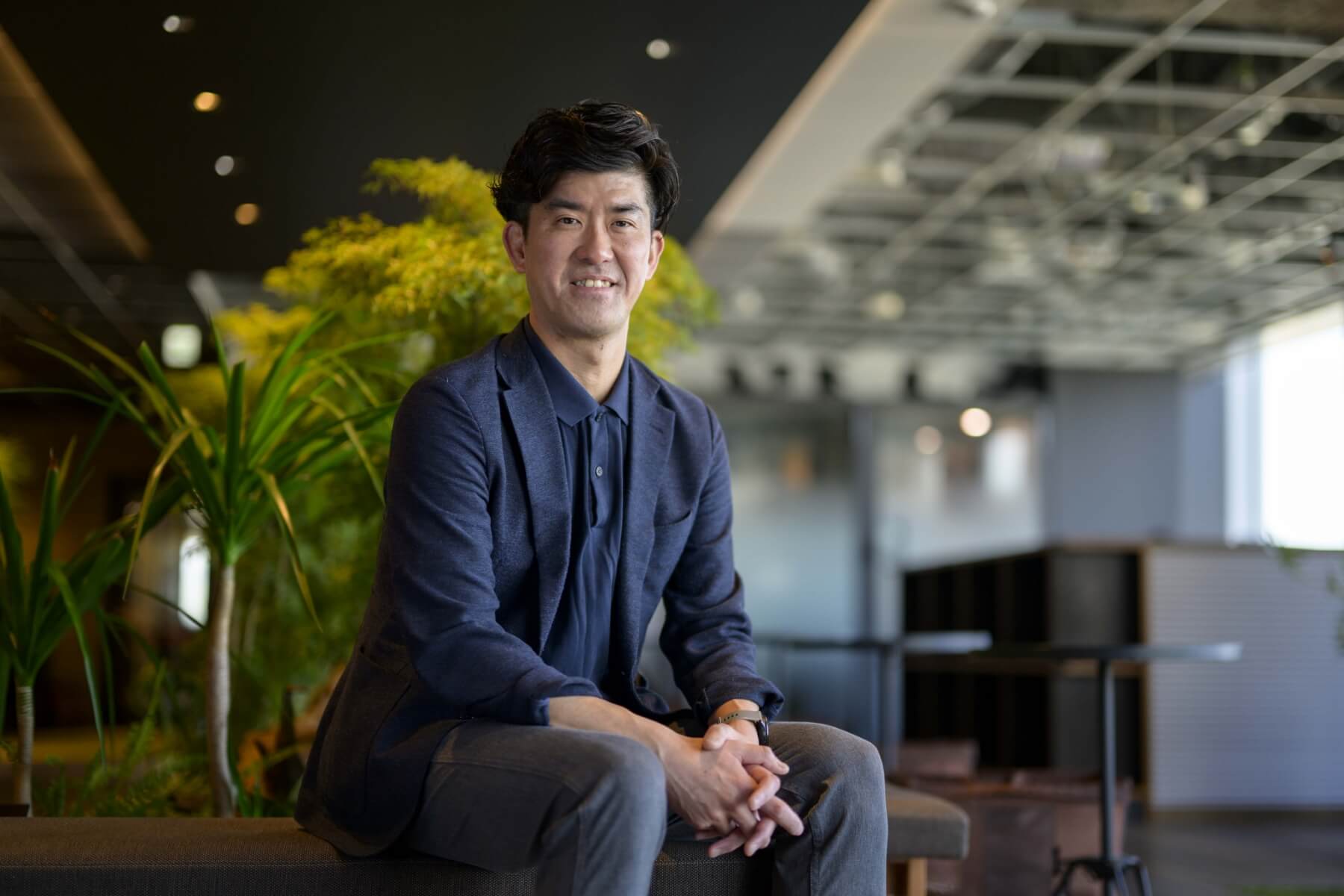
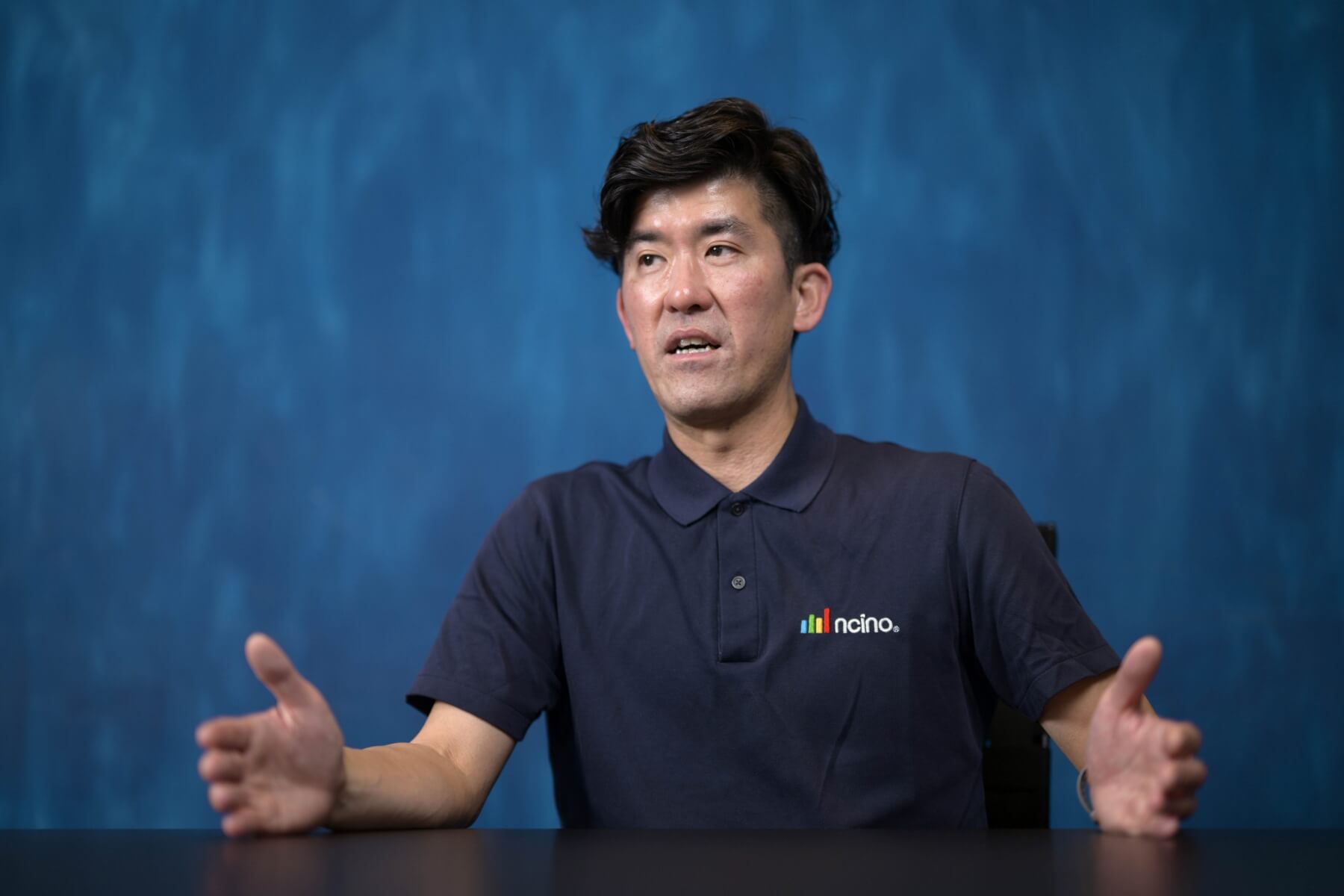
What Japan Market Entry Tests First Is How the Relationship Is Built
Q: Did that experience shape the way you now think about the Japanese market?
Nomura:
Very much so. That is why I now feel even more strongly that what matters, first and foremost, is whether a company entering Japan truly has respect for the Japanese market. That respect invariably shows itself, even in the interview process. Does the company look at the candidate from above and ask, in effect, “Can this person really do it?” or “Do they really understand the market?” Or does it approach the situation with the mindset of trying to understand the market together?
That difference has a major impact on the relationship that follows.
In Japan market entry, I believe the first question is not strategy or hiring in isolation. It is whether that kind of relationship can be built in the first place.
To be continued in Vol. 2
Further Reading
What, concretely, does Nomura mean when he says that the relationship
between headquarters and the Japan team matters so much?
To explore that idea in greater depth, we developed a companion white paper for global CEOs that generalizes and structures his perspective: The First Decision in Japan Market Entry Is Not “Who to Hire”.
The paper examines questions such as:
・What are the most common misreads companies make at the outset of Japan entry?
・What qualities matter most in a local leader beyond market familiarity?
・What does “respect” from headquarters look like during the interview process?
・How can companies build a candid learning loop between HQ and the local team?
・What kind of organizational design allows failure to become learning in the Japanese market?
We invite you to download and read it.
.jpg)
.jpg)