




Vol.3  - How to Scale a Business in the Japanese MarketFrom Builder-Type GTM to Enterprise Sales

By Satoshi Kawaminami
 - March 25, 2026 - 

Satoshi_Kawaminami_1


In Vol.1, we introduced Market Creation as the first phase of entering the Japanese market.
In Vol.2, we explored the importance of building trust in Japan through the concept of Trust Architecture.
After moving through these two phases, companies begin to enter the stage of business expansion.
In this article, we examine how organizations can scale their business in Japan, focusing on organizational design and the evolution of GTM strategies.

Organizational Structure in the Early Stage of Market Entry

Q: When entering the Japanese market, what kind of organizational structure should companies start with?

Kawaminami: In the early stages of entering the Japanese market, it is common for companies to start with a small team rather than building a large sales organization from the beginning.
The ideal structure varies depending on the nature of the product or service. However, many companies begin with a small group responsible for roles such as:

・Sales
・Technical support
・Partner development

This approach allows the team to deepen its understanding of the market while validating demand.
By gradually expanding the organization based on market feedback, companies can build a solid business foundation while minimizing risk.
Another option is to establish a “pre-organization” during the preparation phase before a full-scale entry into Japan. This team can focus on executing a Builder-type GTM strategy.
Depending on the product category, this can be particularly effective for solutions positioned higher in the value chain than infrastructure technologies, such as advanced AI technologies or SaaS platforms. In such cases, a dedicated team focused on understanding the market can play a crucial role.

Transitioning to Enterprise Sales

Q: When should companies transition to an enterprise sales model?

Kawaminami: In many cases in Japan, the Market Creation phase establishes the foundation of the market through a Builder-type GTM approach.
As more implementation cases emerge, companies can gradually transition to an enterprise sales model.
Once market understanding deepens and the number of reference customers increases, a more structured sales organization becomes necessary.
For example, when:
・Multiple implementation case studies have accumulated
・Market awareness has increased
・Inbound inquiries from customers begin to grow

companies typically need to establish specialized teams such as:
・Enterprise sales
・Customer success

The most important factor at this stage is whether use cases and value propositions have been standardized.
In other words, the right time to transition is when the organization has developed a repeatable “winning model” that does not rely solely on the skills of individual salespeople.

Satoshi_Kawaminami_4

Structuring the Sales Organization

Q: As the sales organization expands, what kind of structure becomes necessary?

Kawaminami:
As the business grows, it becomes increasingly important to build a repeatable sales model at the organizational level, rather than relying on individual experience or personal relationships.
In many organizations, this involves defining roles such as:
・Field sales
・Inside sales
・Customer success
・Presales
・Partner sales

When these roles work together effectively, they support the entire process—from customer acquisition to implementation and long-term customer success.
However, there are also cases where companies expand their teams too quickly before operational processes have been standardized.
In such situations, even after a year, the business may fail to grow as expected. The company may then be forced to restructure the organization. In Japan, however, employment laws make it difficult to terminate employees easily, which can create additional challenges.
This is therefore a critical point where leadership judgment becomes especially important.

Scaling Through Partners

Q: What role do partners play when scaling a business in Japan?

Kawaminami: During the expansion phase, partners contribute not only to building trust but also to scaling the business.
In the enterprise market, it becomes increasingly difficult for a company’s internal sales organization alone to cover every potential customer.
System integrators and IT consulting firms often have extensive networks of enterprise customers, which allows vendors to access a broader market through partnerships.
In addition, enterprise implementations typically involve complex tasks such as:
・System integration
・Business process design

When SIs and consulting firms take responsibility for implementation support, companies can run multiple customer projects simultaneously.
In this sense, during the Enterprise Scaling phase, partners play a key role in accelerating growth by extending both sales reach and implementation capacity.

Satoshi_Kawaminami_7

Achieving Long-Term Growth in Japan

Q: What perspectives are important for achieving sustainable growth in the Japanese market?

Kawaminami: In Japan, it is important to focus not only on short-term revenue but also on building a long-term business foundation.
By progressing step by step through:
・Market understanding
・Trust formation
・Organizational growth
 
companies can achieve sustainable business expansion.
One characteristic of the Japanese market is that once a strong relationship of trust is established, it often leads to long-term contracts and expansion into additional departments within the same organization.
For this reason, continuous investment and long-term commitment are essential for sustained success in Japan.

Ready to Take the Next Step?

For a deeper understanding of how to move beyond founder or individual-driven market development and
build a scalable, sustainable growth model, please refer to our white paper:
“Build the Market Before You Scale – Evolving from Builder-Type GTM to Enterprise Sales”

In this white paper, you will learn:

・How to structure your organization for early-stage market validation with a "quality over quantity" approach
・How to transition from individual-dependent sales to a repeatable enterprise sales organization
・How to standardize winning use cases and value messaging patterns
・The three key roles of partners in accelerating growth: market access, implementation capability, and industry expertise
・How to scale your organization at the right time to avoid common pitfalls

This white paper provides practical insights on organizational design and ecosystem building to enable sustainable and
stable growth in the Japanese market.
Download the white paper now to get started.

Download the white paper now.

Related Articles

Vol.1 – Entering the Japanese Market Starts with “Market Creation,” Not Sales - Market Creation and GTM Design

Entering the Japanese market starts with market creation and GTM design—not sales.
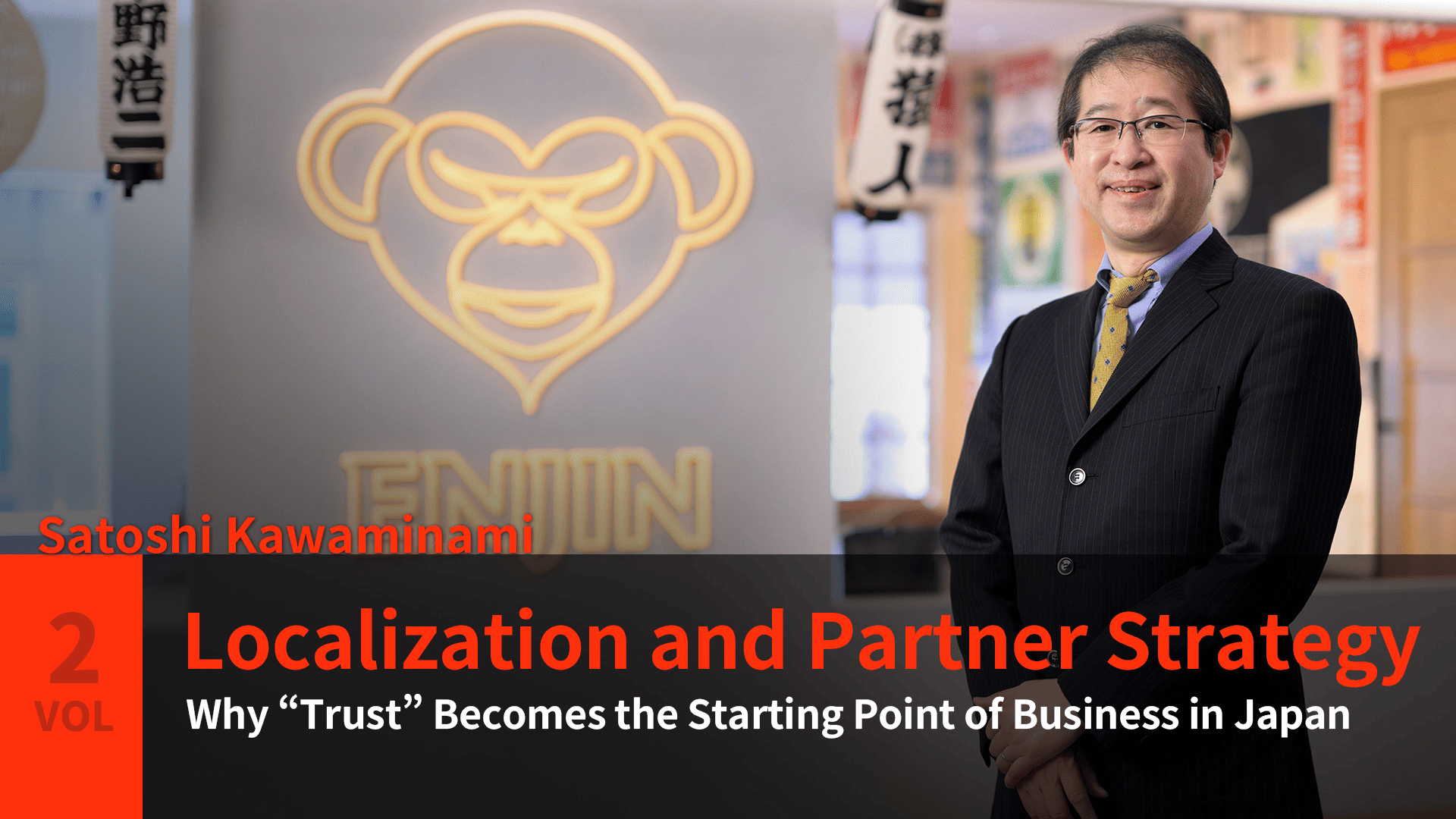
Vol.2 – Why “Trust” Becomes the Starting Point of Business in Japan - Localization and Partner Strategy

Localization and partner strategy play a central role in building trust in the Japanese market.

Startup support_en02
Working Together on the Go-to-Market Strategy of a New Business
Supporting a major SIer_en01
Synergy Effects from Business Unit Marketing Support & Corporate Marketing Support

Supporting a SaaS company_en

Completely Overhauling the Marketing Strategy

Back

INQUIRY

Contact

We support brand penetration in and
creation of business opportunities.

CONTACT US